
Sources for Camarillo Previous Residents
A house history needs more than one era. Current parcel records locate the land. Recorded instruments show title transfers. City directories and census schedules add dated names. Permits explain when a structure changed. Probate, obituary, cemetery, and local-history records can close a life trail. The table separates the source’s coverage from the question it can answer.
| Source | Years it covers locally | Where held | What it shows |
|---|---|---|---|
| Assessor and County View | Current roll and map; some historic fields | Ventura County | APN, situs, values, map clues, mailing channel |
| Recorded deeds and index | County records infrastructure from 1873; online cutoff unknown | Ventura Recorder | Grantor, grantee, document date, legal description |
| Local city directories | Verified 1959, 1960, 1964/65, 1970 | Library, State Library, databases | Named person or business at an edition address |
| Federal census | Through 1950 public in 2026 | NARA, library databases | Household, relationships, age, birthplace, address |
| Camarillo permits | Legacy system plus OpenGov after 7/1/2025 | Building and Safety | Work, status, applicant, contractor, dates |
| Probate, obituaries, cemeteries | Collection-specific | Court, library, museum, cemetery sources | Death, heirs, life, or burial endpoint |
The online Recorder cutoff and a complete Sanborn run were not verified. Keep those gaps in the research notes rather than inventing an oldest deed or map year.
Trace Camarillo Past Residents Through Deeds
The deed chain is the backbone of a previous-residents search, but it follows recorded ownership rather than everyone who lived at the address. Begin with the current situs, APN, and assessed owner. Then use the Recorder’s grantor-grantee index and the exact legal description to move from one seller to the prior seller.
- Resolve today’s address in County View and record APN, city layer, tract, lot, and map context.
- Find the current owner’s purchase instrument and save document number, record date, party roles, and legal description.
- Search the seller as an earlier grantee, testing spelling variants and both index roles.
- Compare the next instrument’s legal description, map, transfer date, and any referenced deed or trust.
- Stop at a parcel split, combination, trust, or jurisdiction change and use the map or prior APN to bridge it.
- Ask the Recorder for counter access, an appointment, or a copy when the web index or image does not reach the needed record.
The Ventura Recorder self-service disclaimer calls the index a catalog or guide rather than the underlying document. The Recorder’s main office is at 800 S. Victoria Avenue in Ventura, with published Monday-Friday hours of 8:00 a.m. to 4:45 p.m. and appointments required for specified services. The official-record copy instructions describe the direct copy route. The online start year was not established, so an older chain may require the counter or copy route.
- Grantor
- The party transferring or releasing an interest in the indexed instrument.
- Grantee
- The party receiving or gaining the indexed interest.
- Chain of title
- A connected sequence of recorded instruments tied by parties and legal description.
- Legal description
- The recorded land description that can preserve continuity when street text or APN changes.
Camarillo Past Residents and Changed APNs
A prior owner can disappear from a simple street search when a parcel is split, combined, or converted into a subdivision or condominium interest. County View’s schema can expose a previous APN, tract, map, lot, block, parcel, condo reference, building, unit, document number, and date fields. Not every field appears in the ordinary popup, so use the Record Maps layer and recorded instrument to verify the bridge.
New Camarillo planned areas add time clues. Rancho Calleguas dates to 1988, Pitts Ranch to 1989, Prado de Las Posas to 1995, Village at the Park to 2001, Camarillo Commons to 2007, and Springville to 2008. A current street in one of those areas may not exist in the 1970 directory evidence. Search the older acreage or tract description, not only the modern street name.
Record the old and new APN side by side, then compare deed legal descriptions and map dates. A changed identifier is a prompt to investigate, not evidence that an occupant changed.
Camarillo Previous Residents in Directory Years
The verified Camarillo city-directory evidence includes 1959, 1960, 1964/65, and 1970. The citations show names or establishments tied to street addresses, but the accessible research did not expose a complete personal household entry, publisher run, or local abbreviation key. A previous-residents search should cite the edition and page exactly, then treat an entry as one dated clue.
Search the alphabetical section and, only if present, a street-order or criss-cross section. Copy the street spelling, number, suffix, and any marks. Browse neighboring entries for context, then compare the next or prior volume. A missing name can reflect a move, death, changed listing, missed canvass, or missing edition. It does not prove a person was never there.
The collections and shelf routes are covered on the Camarillo city directory page. The backward address method here uses those volumes as evidence without rebuilding the whole historical collection.
Camarillo Previous Residents and the 1950 Census
Through 1950, public federal census schedules can supply household members, relationships, ages, birthplace, address, and occupation at the enumeration date. Pair the 1950 census with the 1959 or 1960 directory citations to bridge a decade. The 1960 census is not currently public in 2026 and is scheduled for release under the 72-year rule in 2032.
| 1950 census | Household snapshot at enumeration, including relationships and address. |
|---|---|
| 1959 or 1960 directory | Later name-to-street snapshot in a verified local citation. |
| 1964/65 or 1970 directory | Later continuity, moves, or institutional context. |
| 2032 release | Future 1960 census comparison, not an available current source. |
The National Archives census guide is the authority for the release rule. For the gap after 1950, use deeds, permits, school material, voter records where lawfully historical, newspapers, and later directory editions.
Camarillo Past Residents in Permit Dates
Permit records are useful for dating construction, additions, reroofing, electrical or solar work, demolition, and final inspection. They may name applicants, contractors, or owners. They do not establish every past resident. Camarillo moved new permit applications to OpenGov on July 1, 2025, while legacy Click2Gov remains relevant for older active permits and inspections.
The legacy form searches by application, address, parcel components, or name. It separates street number, direction, street name, search type, and suffix, and it offers parcel fields such as book, page-block, lot, tract-phase, and map components. The official inspection did not reveal the first legacy year or all dropdown values. Request an underlying permit card or plan through Building and Safety or the City Clerk when the summary is not enough. Building plans may have copyright or security limits.
Use the permit date as a structural clue, then return to the deed, directory, census, or obituary layer for people.
Before 1873, Find Previous Residents in Santa Barbara
Ventura County was authorized March 22, 1872 and became effective January 1, 1873 after separation from southeastern Santa Barbara County. A pre-1873 Pleasant Valley or Camarillo property trail therefore belongs in Santa Barbara County books and archival material. This jurisdiction shift is one of the most important ways a previous-residents search can look empty when the search is actually pointed at the wrong county.
Camarillo incorporated October 22, 1964. Before incorporation, older civic and permit evidence may sit with the county, special districts, schools, post office, or community archives rather than a City Clerk. Record the jurisdiction that existed at the time of the source.
Note: A modern city name can describe an older place, but it does not change the county or office that held the record then.
No Verified Camarillo Map for Previous Residents
No authoritative Camarillo-specific Sanborn sheet or year set was located in the research. Do not fill that gap with a nearby map or a generic fire-insurance reference. Ask Camarillo Library, the California State Library, the Museum of Ventura County, or another named archive whether a sheet exists and what area it covers.
In the meantime, County View aerial layers, recorded maps, permits, legal descriptions, and directory addresses can supply partial building and street context. Aerial imagery shows changing structures, while a deed or map supplies legal continuity. Each source should be labeled as map, structure, title, or name evidence.
Camarillo Past Residents Meet Probate
Probate, obituaries, newspapers, and cemetery records can close the human part of a house history. FamilySearch exposes image-only California probate estate files from 1833-1991 as a broad collection route, but county coverage must be checked. The Museum of Ventura County describes more than 80 county newspaper titles over time, so search multiple titles and date spans. Search by address, spouse, organization, and occupation as well as exact name.
Pleasant Valley Cemetery research documented 218 burials from 1871-1941. Remains were moved to Ivy Lawn in 1941-43, with at least five possibly not moved before Dizdar Park’s 1945 dedication. That unusual relocation can explain why a directory or obituary trail ends at one cemetery and resumes in another.
Ventura Superior Court records instructions are the route for a public probate file when Case Inquiry points to one. The court’s published fee schedule supplies copy details.
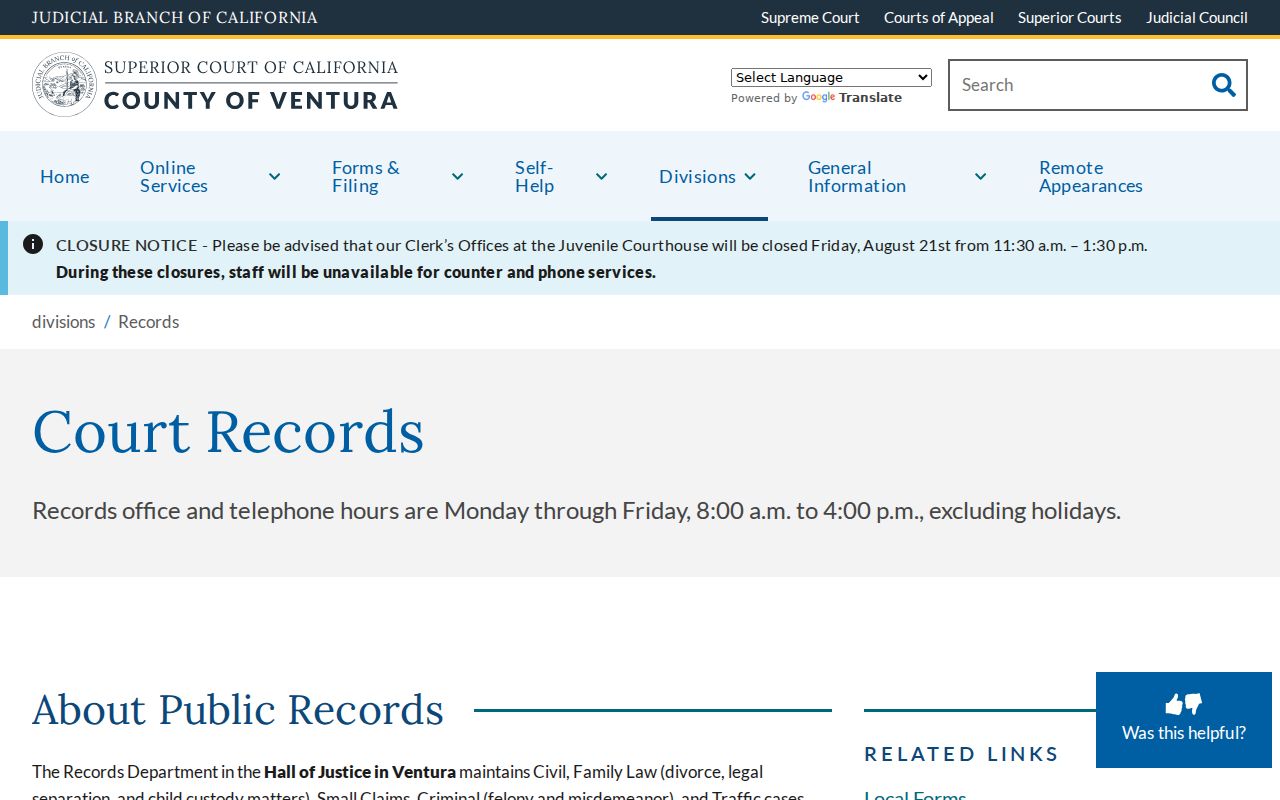
The county court route can provide a probate or civil record endpoint when the public index exposes one.
Federal cases use the Central District of California and PACER; an account and the current PACER pricing policy apply. The PACER account portal provides the federal access route.
The PACER case locator is the source for the federal search route shown below.
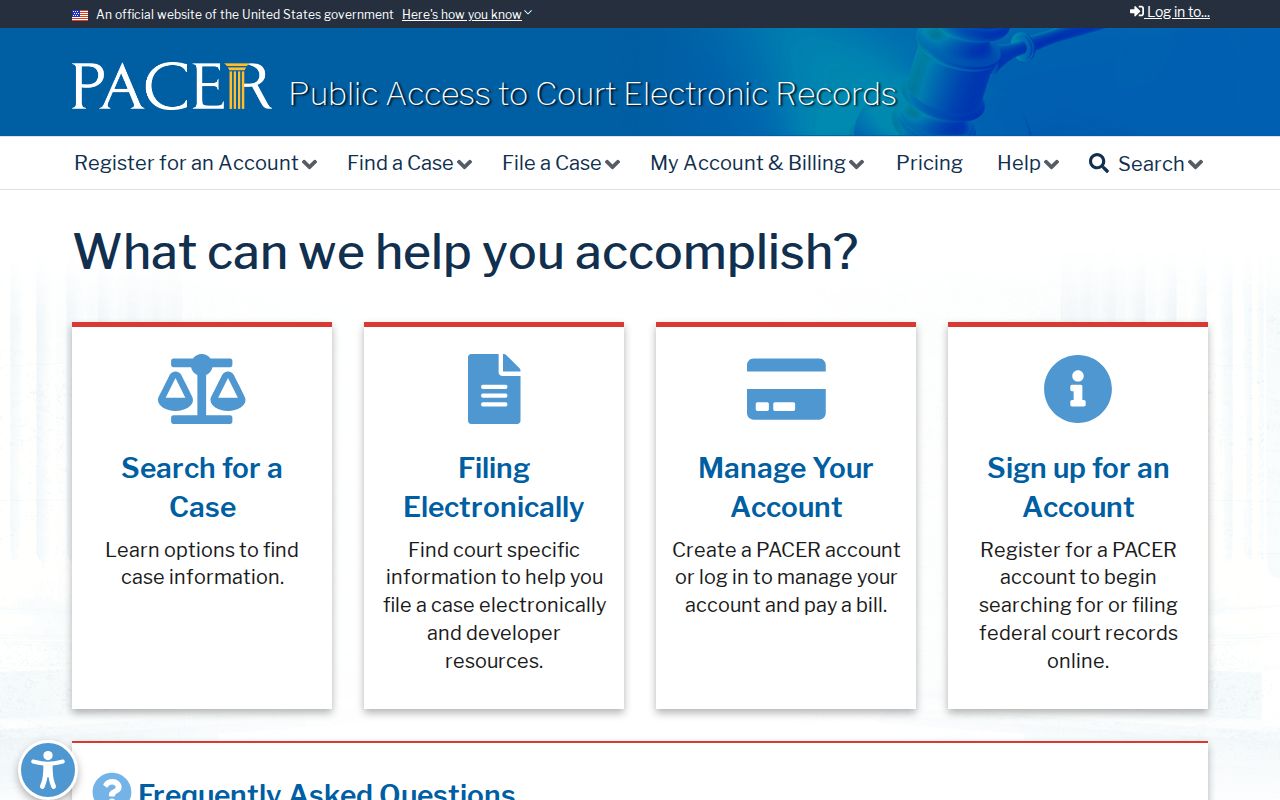
PACER belongs to a separate federal trail and should be used only when the address history points to a federal case.
Limits on Camarillo Past Resident Research
Previous residents means people connected to an address in a source and time period. It does not mean every person who stayed there. Ownership, mailing data, permits, directories, census schedules, probate, and cemetery records each leave different traces. Protected addresses, nonowners, household members, sealed files, and missing editions may remain absent.
Lawful house history. Use a Camarillo address trail for family history, preservation, estate research, and respectful curiosity. Do not use it to stalk, harass, threaten, or track a living person.
A careful final note names the oldest verified instrument, the latest dated household clue, the source gaps, and the office that can answer the next question. That is more reliable than treating a partial previous-residents result as a complete list.